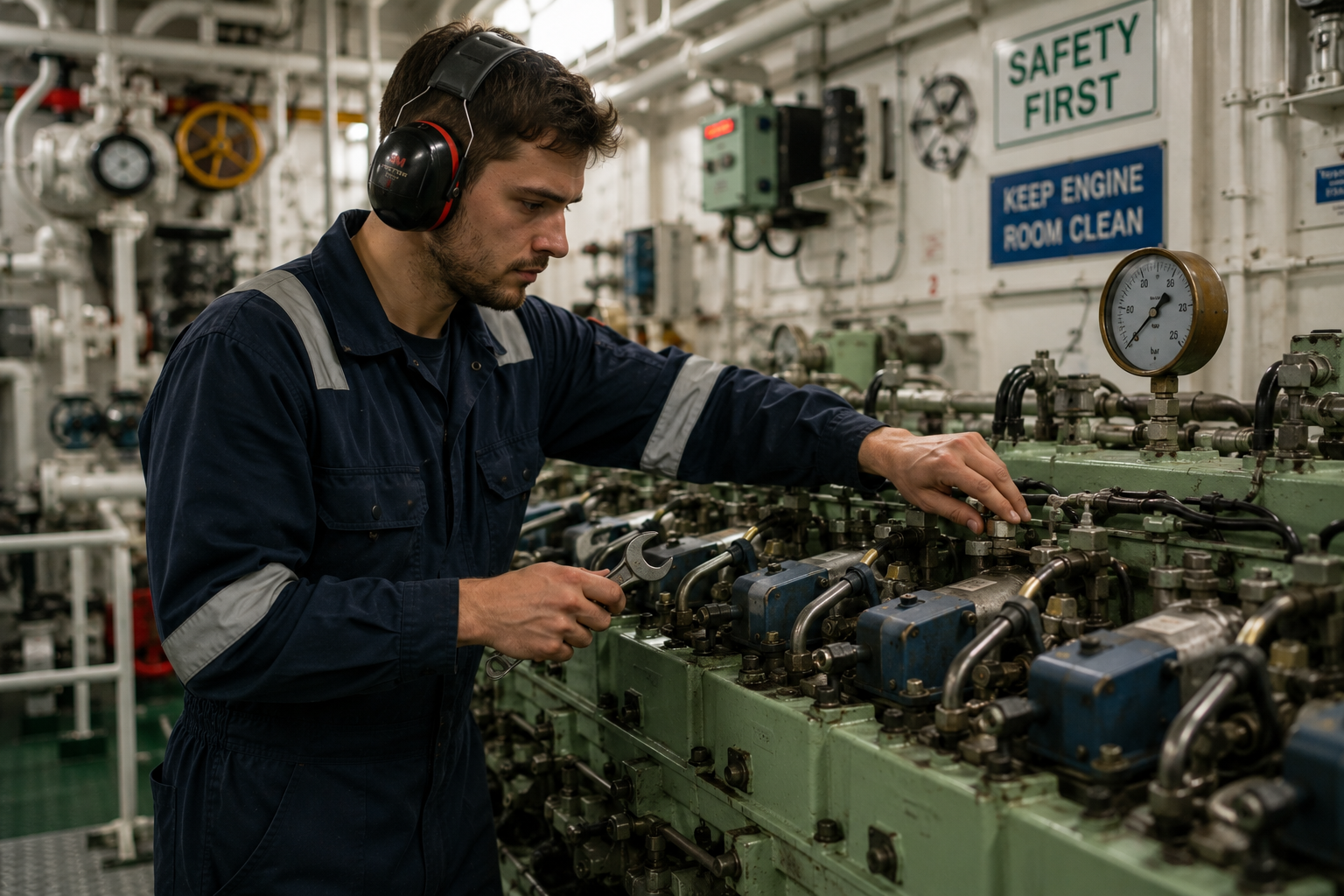
The motorman is the experienced engine room rating in the maritime rating system. The position sits above the wiper entry level and below the certificated engineer officers. Understanding what the job involves, what it pays and what the pathways upward look like helps people entering the engine department track make better decisions.
What Motormen and Oilers Do
Engine room maintenance is the core of the work. Cleaning machinery spaces, changing filters, greasing fittings, assisting engineers with planned maintenance tasks on generators, pumps, compressors and auxiliary equipment. The machinery that keeps a vessel running requires constant attention and the ratings carry out most of the hands-on work under engineer supervision.
On vessels with UMS certification, meaning the engine room can operate unattended during night hours, engine ratings typically work day work schedules with on-call availability rather than continuous watchkeeping. This shifts the rhythm of the job toward planned maintenance rather than reactive monitoring.
During engine room watchkeeping on non-UMS vessels, the motorman or oiler stands watch in the engine control room, monitors gauges and alarms, responds to routine issues and contacts the engineer on call for anything requiring technical decision-making.
Port operations add specific work. Switching between auxiliary engines, managing ballast pump operations, fuel oil transfers, cargo pump monitoring on tankers: the engine department is active in port in ways that differ from the sea passage routine.
The Certificate Requirements
The STCW Able Seafarer Engine qualification is the internationally recognised standard for experienced engine ratings. Equivalent in status to the Able Seafarer Deck certificate for deck ratings.
Requirements include documented engine room sea service and completion of the training competencies in STCW Table A-III/5. The specific sea service requirement varies by flag state.
The Engine Room Watch Rating certificate under STCW III/4 applies to the wiper entry level. Moving from wiper to motorman or oiler requires the more advanced qualification.
Pay
Monthly contract rates. Leave unpaid.
Wiper at entry: $900 to $1,600 per month. Motorman or Oiler: $1,400 to $2,500 per month depending on vessel type and operator. Offshore engine ratings in North Sea operations: $2,500 to $4,000 per month.
The offshore premium applies to engine ratings as well as deck ratings. The BOSIET certificate is the entry requirement alongside standard STCW documentation.
The Officer Pathway
Engine ratings who want to progress toward officer rank need formal marine engineering academy training or a competency-based route under their flag state that credits sea service toward certificate requirements.
The sea service accumulated as a motorman typically counts toward officer certificate sea service requirements in most flag states. Getting specific information from the flag state administration about exactly how existing sea service is credited is the practical first step before committing to a programme.
Engineers who came through the rating track before officer qualification consistently describe the practical advantage of already knowing engine room systems from the working level before learning them academically.