Bosun Sea Jobs: What the Role Actually Demands
The bosun is the most influential unlicensed person on any merchant vessel. That statement sounds like flattery until you spend time watching a competent bosun run a mooring operation or organise a deck maintenance programme. The chief officer plans and directs. The bosun executes and leads. The practical difference between a good bosun and a poor one shows up in everything the deck department produces.
**What the Work Involves**
Deck maintenance is the dominant activity between port calls. Painting, rust prevention, equipment inspections, wire and rope management. On a bulk carrier this is especially intensive because the holds and hatch covers are exposed to cargo and weather in ways that accelerate deterioration. The bosun plans the work programme, assigns the crew and ensures standards are met. The chief officer reviews the output. The bosun is accountable for the execution.
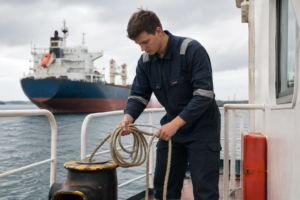
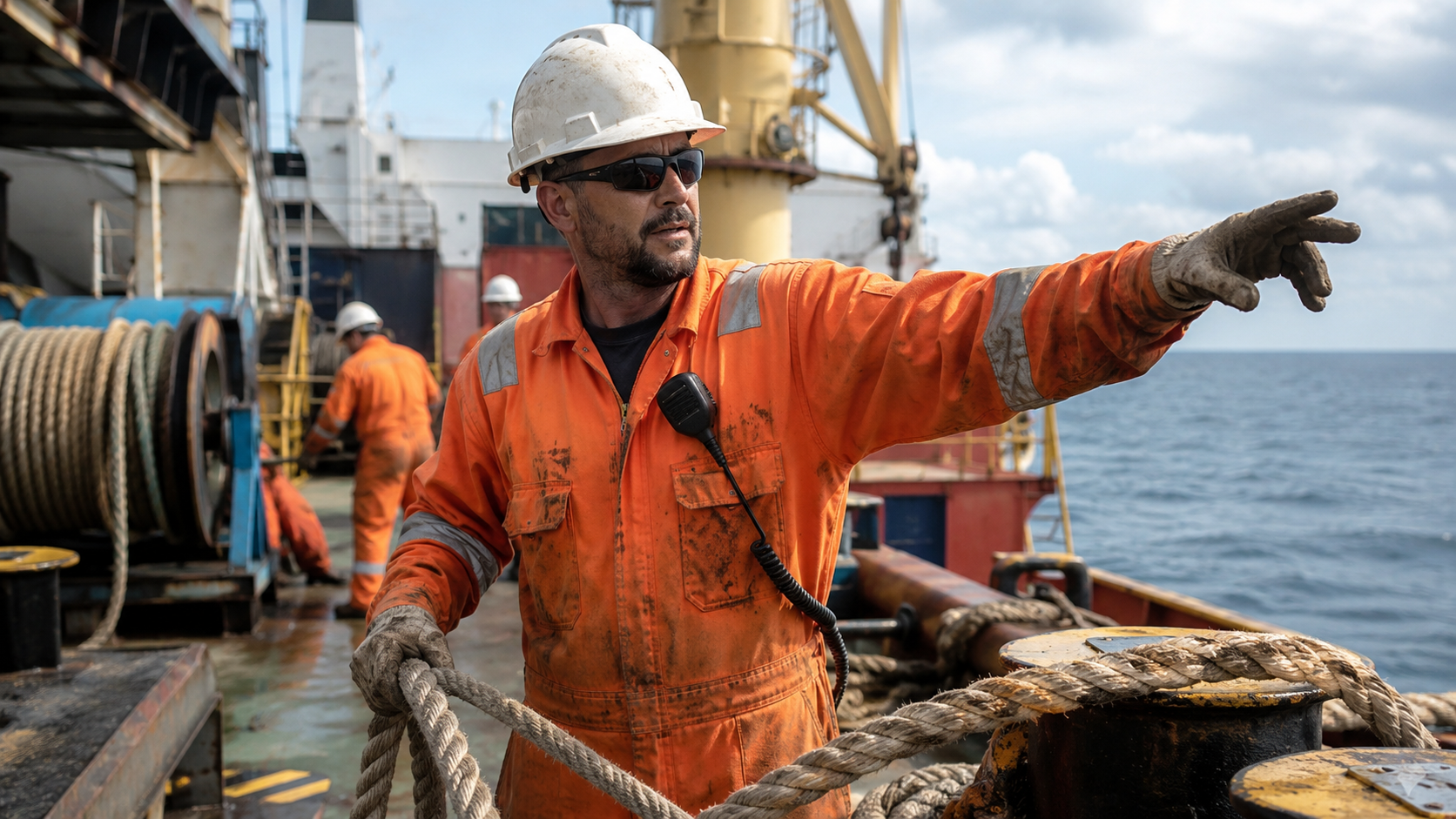
Port operations are where the bosun’s leadership becomes most visible. Mooring stations require coordination between the bridge team and the deck crew. The bosun typically commands the bow or stern station, managing the actual line work while the officer communicates with the pilot and the bridge. On vessels with complicated berths or strong currents, the quality of the mooring team leadership matters more than most people ashore understand.
Safety equipment management is the administrative side of the role that junior crew rarely see. Lifeboats, rescue boats, fire extinguishers, breathing apparatus sets, immersion suits. The bosun maintains the inspection schedule, logs the checks, identifies deficiencies and reports them before they become PSC problems. A well-run vessel rarely gets detained. Part of the reason is a bosun who treats this paperwork seriously rather than as a formality.
**Pay**
The ranges depend heavily on vessel type and operator quality. A bosun on a standard bulk carrier earns $1,800 to $2,600 per month. On a container ship with a major operator the figure moves to $2,200 to $3,200. Chemical tanker bosuns earn $2,500 to $3,600. North Sea offshore bosuns on 28/28 rotation reach $4,500 to $6,500 per month.
The offshore premium is the most significant jump. The combination of BOSIET training, more demanding operational environment and the rotation model produces rates that are genuinely double the bulk carrier range.
**What It Takes to Become Bosun**
No single mandatory certificate unlocks the bosun position. Operators look for an Able Seafarer Deck certificate, four to eight years of AB sea service on relevant vessel types, and evidence of supervisory capacity. That evidence comes from references, from documented leadership during sea service and from a CV that shows progression rather than repetition.
The soft requirement is harder to build than the certificate. Operators want a bosun who can manage a crew team of different nationalities, different languages and different levels of experience under physical and time pressure. The candidates who demonstrate this in their references get the first bosun contract. The ones who only demonstrate technical competency wait longer.
**The Shore Trajectory**
Some bosuns spend their entire sea career at this level and have no interest in doing anything else. They become extremely good at it and earn well on quality vessels. Others use the bosun role as the foundation for an officer cadetship, taking advantage of the practical seamanship knowledge they have built. Both paths are legitimate and the market supports both.