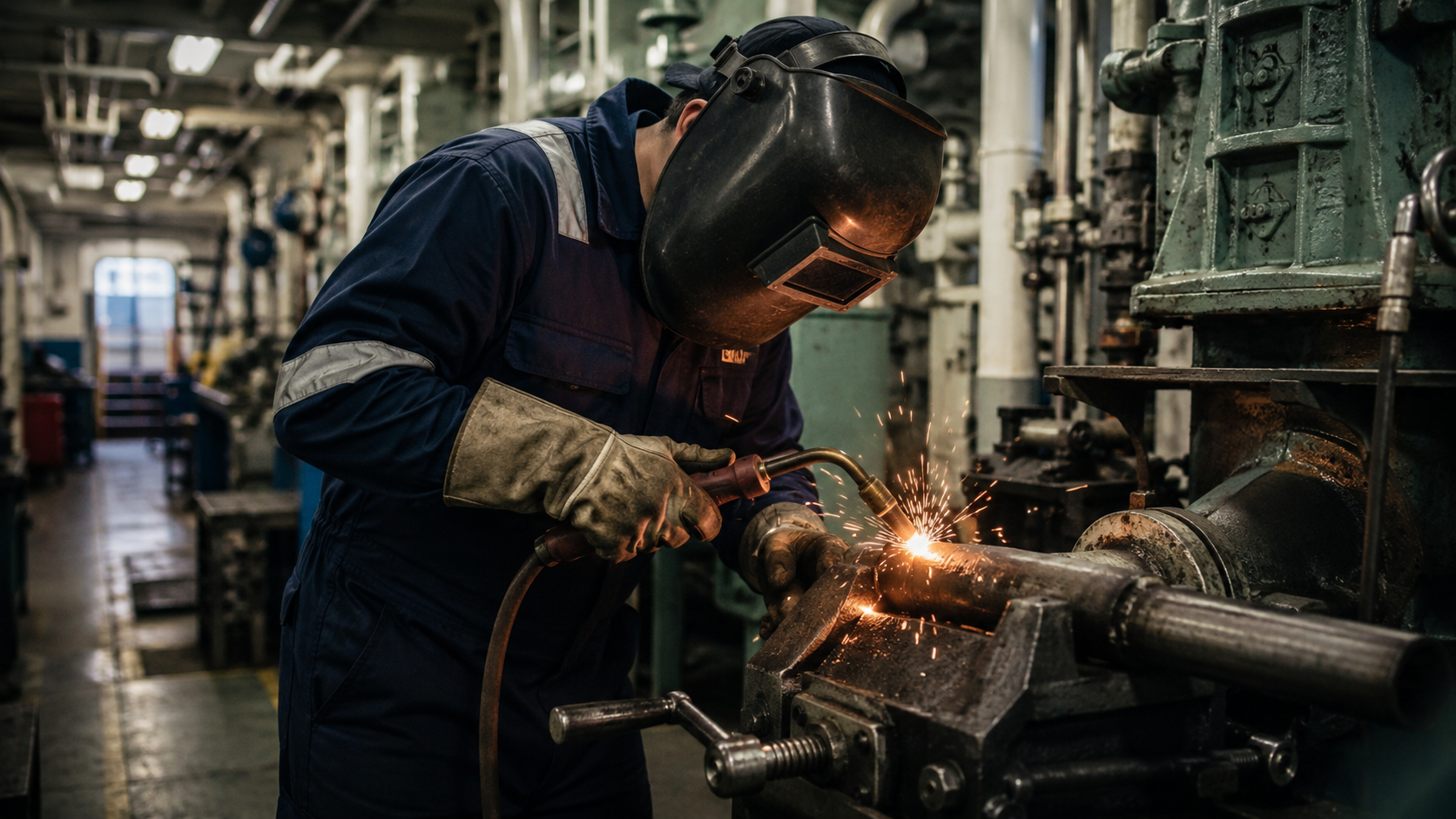
The fitter is one of the better-paying rating positions in the merchant fleet and one of the least discussed. The role sits within the engine department, carries specific trade qualifications that the general ratings pool does not have, and is in consistent demand across all vessel types. If you have a mechanical trade background and are considering sea employment, this is worth understanding properly.
**What Fitters and Welders Do on Vessels**
The fitter maintains mechanical systems that require trade-level skills beyond the scope of routine motorman maintenance. Hydraulic systems, piping repairs, engine component work, deck machinery overhauls, valve maintenance and fabrication work are all in scope. On vessels with significant mechanical complexity the fitter is working at a level that the motorman is not qualified for and that the engineering officers do not have time to execute directly.
Welding is the specific skill that drives the welder designation. Repair of hull structures, pipe systems, tank internals and equipment foundations. Underwater welding or cutting in some specialised contexts. The quality of welding on a vessel affects its structural integrity in ways that PSC inspections assess. A fitter-welder who does structural repair work to a proper standard produces results that matter operationally.
On tankers and offshore vessels, the fitter’s role expands to include cargo pump component maintenance, hydraulic control systems on deck machinery and anchor handling equipment on AHTS vessels. These are technically demanding applications where the trade background is genuinely necessary rather than just preferred.
**Pay**
The figures vary by vessel type and operator more than for general deck ratings. Standard bulk carrier or general cargo fitter: $2,000 to $3,200 per month. Chemical tanker fitter: $2,500 to $3,800. Offshore supply vessel fitter: $3,200 to $5,000 on rotation. AHTS or construction vessel fitter with specific equipment experience: $4,000 to $6,500.
The offshore premium that applies to other positions applies equally to fitters. The combination of trade qualification, BOSIET training and offshore operational experience produces a candidate profile that commands premium rates in the offshore market.
**Certificate Requirements**
The trade qualification is the foundation. A recognised mechanical engineering apprenticeship, welding certification or equivalent vocational qualification is what makes the fitter position accessible. The maritime-specific additions are the standard STCW Basic Safety Training package and, for vessels requiring it, the Engine Room Watch Rating certificate.
Offshore fitters need BOSIET. Tanker fitters need basic tanker training. The same certificate logic that applies across the rest of the rating pool applies to fitters; the trade qualification opens the base position and the sector-specific training opens the higher-paying sectors.
**The Demand Side**
Fitters with genuine welding and machining skills are consistently harder to place than general engine ratings. The trade qualification creates a smaller supply pool. Operators advertising fitter vacancies often wait longer to fill them than equivalent motorman or AB positions. For qualified tradespeople considering whether the sea career is viable, the demand situation is more favourable than for unqualified entry-level positions.